When I first started getting involved with Power BI User Groups, I thought community building was mainly about organizing events.
That was the visible part.
But over time, after founding the Athens Power BI User Group and later taking over the leadership of the Berlin Power BI User Group, I learned that running a community is much more personal than that.
For me, running these two communities has never been only about Power BI.
Starting from zero is harder than it looks
Founding the Athens Power BI User Group from scratch was one of those things that sounded simpler in my head than it felt in reality.
At the beginning, there is no rhythm. No audience habit. No existing community memory. No guarantee that people will care.
And then reality hits. Maybe 50 people register. Maybe 10 show up. Sometimes even less.
At first, I took that personally. I was investing my personal time, trying to bring something useful to the community, and still asking myself: Does this make sense? Am I pushing something people do not really need? Should I just stop?
There were several moments when I was very close to giving it up.
But I slowly understood something that many meetup organizers eventually learn the hard way: no-shows are normal. Especially for free community events.
It is not personal. As an organizer, you need to be emotionally prepared for that. If only 20% of registered people show up in the early phase, it may feel disappointing, but it does not mean the community has failed. It means you are building something. And building something takes repetition.
Taking over Berlin felt different
The Berlin Power BI User Group had a very different meaning for me. It was not just another group. It was the first Power BI User Group I had ever attended myself, before COVID, when in-person meetups were still a normal part of professional life.
I still remember that feeling of joining a community event, meeting people from the same ecosystem, listening to talks, and realizing that Power BI was not only something I used at work. There was a whole community around it.
So when I was later asked to take over the leadership of the Berlin Power BI User Group, it felt meaningful — but also heavy. The group already had more than 1,500 members. That creates a different sense of responsibility. It is no longer only about starting something new. It is about not letting something valuable disappear.
At the same time, I had to be realistic. Running separate sessions for Athens and Berlin would have been too much. So I decided to combine the two communities through tandem online sessions: one event, two user groups, shared effort, shared audience, shared value.
Do not run everything alone
One piece of advice I fully believe in now is this: do not try to run everything alone. A user group may look simple from the outside, but every event has many small tasks behind it.
You need to find speakers, coordinate dates, prepare the event description, create visuals, publish the event, promote it, send reminders, welcome people, host the session, manage questions, potentially record it, and follow up afterwards. Each task is manageable on its own. Together, they become a lot.
That is why a small core team of two or three reliable people can make a huge difference. Not a large committee. Not unnecessary bureaucracy. Just a few people with clear roles and shared ownership.
The strongest user groups I have seen as a speaker were usually not built around one person doing everything. They had a real co-leading team. You could feel it in the rhythm of their events, the energy of the audience, and the consistency of the format.
Templates are not boring — they protect your energy
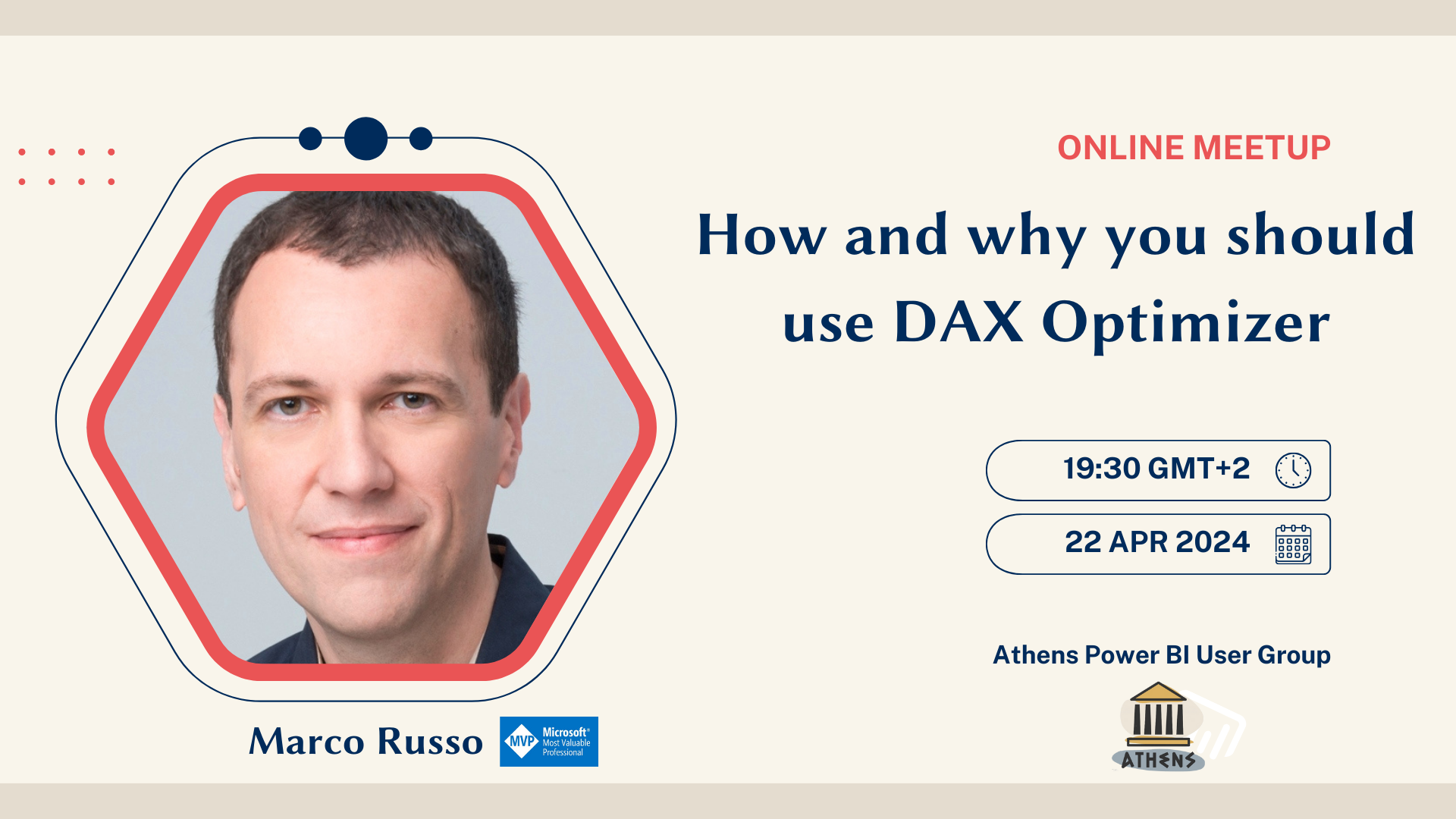
One of the most practical things I created for myself was a standard poster template for announcing events on LinkedIn. It sounds like a small detail, but it changed a lot.
Before that, every event announcement felt like starting from zero. New layout, new visual, new design choices, new small decisions that took time and energy. With a template, I only need to change a few things: speaker name, title, date, time, topic, maybe a photo or logo.
The benefit is not only speed. The repeated design becomes recognizable. Over time, it starts to work almost like a visual trademark. People see the format and immediately associate it with the user group.
Consistency makes people remember you. And for the organizer, consistency saves energy.
Promotion is not one post and hope
Publishing the event is not the same as promoting the event. People need reminders — not because they do not care, but because life is busy. Everyone has work, deadlines, meetings, family, notifications, and too much information competing for attention.
You need to create awareness early, then remind people closer to the event, then remind them again when the event is near. This is especially true for online sessions. With online events, the barrier to register is low, but the barrier to forget is also low.
Meetup is more than an event page
For both communities, Meetup has been very important. And I want to say this clearly: the fact that Meetup is now financially supported by Microsoft for Power BI and Fabric communities is a big help. Thanks to the Microsoft team for that, because these practical things really matter for community organizers.
Meetup is not only an event page. It is also a communication tool. One feature I use actively is the newsletter and reminder functionality. Admins can send messages to people who plan to attend, which keeps communication focused and relevant.
I have learned that reminders on the day of the event work particularly well for online sessions. Some might see this as too much communication, but I see it differently. People have their own struggles during the day. It is my job as an organizer to remind them.
Ask the community what they want
At some point, I also started running polls. I asked people what topics they were interested in. I asked which days of the week worked better. I asked what time of day was more suitable.
This is such a simple thing, but it changes the relationship with the community. Instead of guessing what people want, you ask them. It also gives you useful signals.
A good community is not only broadcasted to people. It is shaped with them.
The first five minutes matter more than we think
Attending a meetup can feel intimidating, especially for someone joining for the first time. People may wonder: Will I know anyone? Will the session be too advanced? Is this group only for experts?
That is why the host role matters so much. A good event does not start with the first slide. It starts with the welcome. The first few minutes set the tone. They tell people whether this is a closed circle or an open one.
As a host, I want speakers to feel comfortable, but I also want the audience to feel safe. Safe to listen. Safe to ask. Safe to not know everything. That atmosphere does not happen by accident. It has to be created.
The audience gives you one hour — respect that
When someone joins a user group event, they are giving you one hour of their life. Sometimes more. Often after a full workday.
Instead, they choose to listen to you, your speaker, and your community. That deserves respect. The session does not need to be perfect. But it should have a clear reason to exist.
Make speakers feel comfortable
A user group depends a lot on speakers. Without people willing to share their knowledge, there is no event. So one of my main responsibilities as a host is to make speakers feel comfortable. That means clear communication before the session, a friendly introduction, a relaxed atmosphere, support during Q&A, and respect for their preferences around recording and sharing content.
This last point is important. It is easy to assume that recording every session and uploading it later is always a good idea. But over time, I have become more cautious about it. Some speakers specifically ask not to be recorded — and I fully understand that. Maybe they plan to present the same topic elsewhere. Maybe they are using the user group as a safe environment to practice and get "flight time." A community should be a trusted space, not a content extraction machine.
Recording sounds simple — until you do it properly
I also experimented with broadcasting sessions live on YouTube. The idea was to make the event feel more exciting and open. Did it work as I hoped? Not really. But I learned a lot — how to set it up, how much preparation it takes, and how many extra things can go wrong.
The same is true for publishing recordings later. In theory, it sounds simple: record the session and upload it. In practice, it adds a lot of extra work — sound quality, the right microphone, editing, free-to-use music, export, upload, description, sharing. All of that comes on top of the already existing work of organizing the event.
So I learned to ask a more honest question: Does this extra effort really serve the community, the speaker, and the organizer? Sometimes yes. Sometimes no. And that is okay.
Learn from other user groups
One of the best ways to improve as an organizer is to observe other communities. I have spoken at different user groups, and every time I notice something.
One group had a very nice format where the host did not jump directly into the main presentation. Instead, they started with a short update on new Power BI features. Another group provided certificates of participation — not important to everyone, but meaningful for students and early-career professionals. Other groups impressed me with their co-leading team: you could feel that the work was shared, the rhythm was established, and the audience was engaged.
These examples reminded me that there is no single correct way to run a user group. You can borrow ideas, adapt them, test them, and see what fits your own community.
The best conversations are often not in the presentation
Some of the most useful exchanges happen before the session starts, during the break, or after the official part is over.
These conversations are rarely perfectly structured, but they are honest. And honesty is something people do not always get from product announcements, documentation, or polished conference demos. In real life, Power BI projects are messy. A good community gives space for that reality.
Power BI communities need business value, not only feature updates
I love technical sessions. But running user groups has taught me that technical depth alone is not enough. The best sessions usually connect the technical topic to a real problem. Not just "here is a feature" — but: why does this matter? When should I use it? What can go wrong?
This is especially important in Power BI, because Power BI is not only a reporting tool. It sits between data, business, design, governance, and decision-making.
That is where the discussion becomes more meaningful.
Beginners make the community better
It is easy to design a technical community only for advanced users. But I think that would be a mistake. Beginners, career changers, business users, students, and people who are still building confidence bring something very important: simple questions. And simple questions are powerful.
Sometimes a beginner asks something that exposes how complicated our field has become. Sometimes they remind us that what feels obvious to us is not obvious at all. A healthy community needs experts, but it also needs people who are still learning. Actually — we are all still learning. The Power BI and Fabric ecosystem changes too quickly for anyone to honestly claim they know everything.
Online and in-person communities need different energy
In-person events are great for networking, informal conversations, and stronger personal connection. People remember the room, the small conversations, the feeling before and after the talk. Online sessions make the community more accessible — people can join from different cities or countries, and it is easier to bring in speakers who cannot travel.
But online events also require extra care. They can easily become passive. People may join while multitasking, keep the camera off, or hesitate to ask questions. So the host has to work a bit harder to create energy, invite interaction, and make the session feel alive. The goal is the same in both formats: make people feel that their time was well spent.
Berlin and Athens taught me different things
Running communities in Berlin and Athens has reminded me that every city has its own character. Berlin has a very international, diverse, and fast-moving tech scene. People come from different countries, industries, and professional backgrounds. Athens has a different energy — a strong sense of personal connection, curiosity, and community warmth. Conversations can become very open very quickly.
Both communities are different, but the core need is the same.
Community building is leadership practice
One unexpected benefit of running user groups is how much it teaches you about leadership. You learn to coordinate without formal authority. You learn to communicate clearly. You learn to bring different people together. You learn that leadership is not always about having the loudest voice in the room. Sometimes it is about making sure other voices can be heard.
In analytics, we often talk about tools, platforms, and technical skills. But long-term impact usually comes from connecting people: business users, data teams, decision-makers, analysts, engineers. Community work is a reminder that technology adoption is always human.
The host should still enjoy the journey
The organizer also needs to have fun. That may sound obvious, but it is easy to forget. When the workload grows, when attendance is lower than expected, when you are tired after work, the community can start feeling like another job. And that is dangerous. A community built on volunteer energy needs joy. It needs curiosity. It needs the feeling that this is still meaningful.
For me, the aim is simple:
If one of these three things is missing for too long, something needs to change.
Why it matters more than the tools
Power BI will keep changing. Microsoft Fabric will keep evolving. AI and Copilot will change how people build and consume analytics. Some best practices will remain. Others will be replaced.
But the need for community will not disappear. People will still need spaces where they can ask questions without feeling judged. They will still need examples from real projects. They will still need encouragement when the ecosystem feels overwhelming.
Final thoughts
Running Power BI User Groups in Berlin and Athens has taught me that community is not just an extra activity next to my professional work. It is one of the places where I learn the most. It has made me a better speaker, a better consultant, a better listener, and hopefully a better contributor to the data community.
It has also taught me that community building is not always romantic.
But then someone asks a good question. Someone sends a kind message. Someone says the session helped them. Someone attends for the first time and comes back again. Someone offers to speak. Someone connects with someone else because of the event.
And then it makes sense again.
That is where community becomes valuable. And that is why, for me, it matters more than the tools.